Stand close to a column inside Sagrada Família and the botanical metaphor stops being postcard poetry. Stone trunks twist, flutes spiral, and branches peel upward into vaults with a logic that is simultaneously structural and lyrical. This essay is a close study of that geometry — hyperboloid shafts as readable load paths — written for Barcelona lookers who want material grammar rather than slogans. A folio note, not a counter offer.
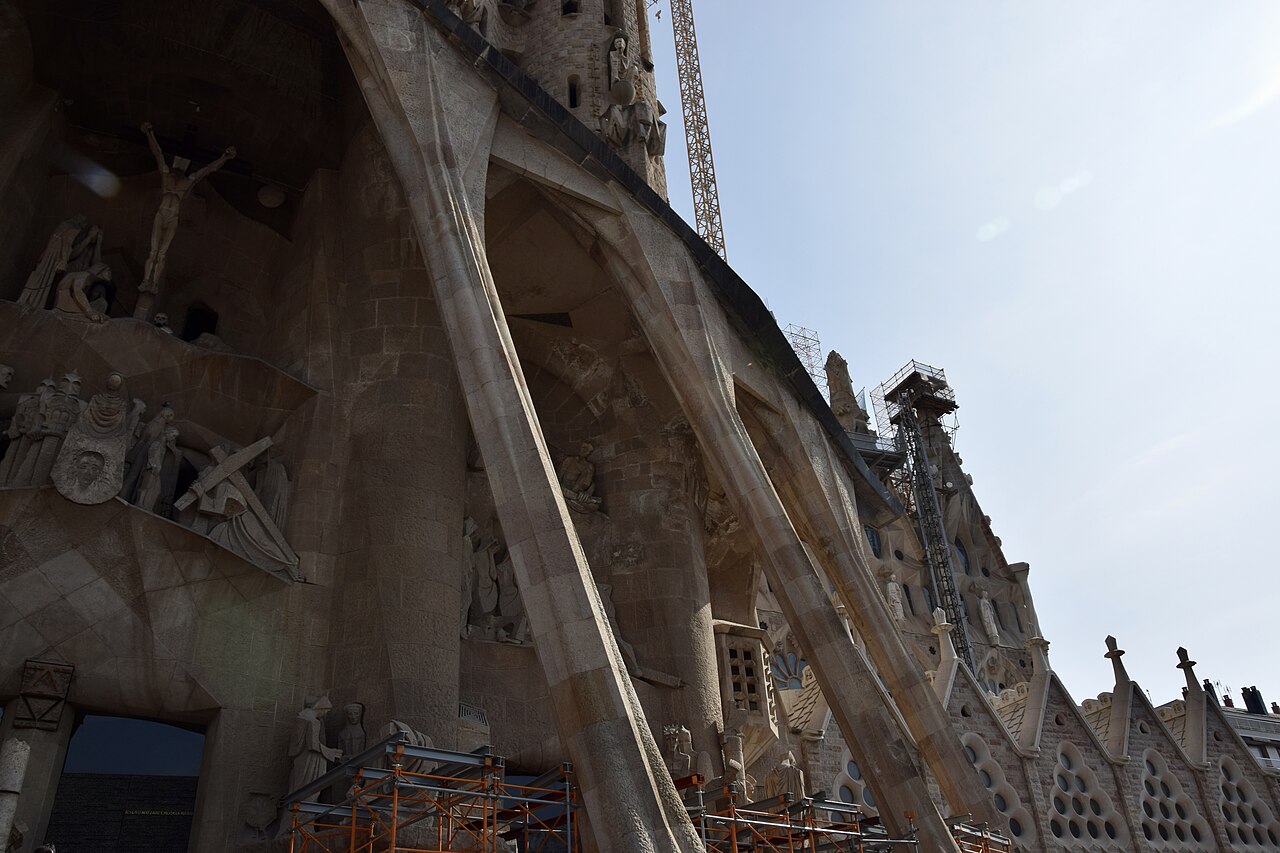
Why “tree” is more than metaphor
Gaudí studied nature as workshop. Trees disperse load through branching; the basilica’s interior follows that intuition with mathematically disciplined forms. Hyperboloid geometry allows elegant transitions from stout bases to slender ramifications without the clumsy steps of purely classical orders. Looking closely, you see not decoration bolted onto structure but structure allowed to flower into decoration’s cousin — surface texture that follows force.
Up close the hand wants to follow flutes. They are not merely grooves for beauty; they guide the eye along spiral narratives that hint at how stone carries weight. Different materials and finishes along a single column family can mark generations of work, yet the branching language remains consistent enough to feel inevitable.
Reading load with the eye
Architectural literacy here is partly athletic: tip the head back, follow a shaft until it splits, count how branches seek vault nodes. Where a classical pier might remain proudly vertical and alone until an entablature, these columns negotiate community — many supports, shared canopy, less megalithic ego. The room feels democratic in structure even as it is hierarchical in liturgy.
Shadow clarifies the reading. Midday washes flatten; angled light rakes flutes into ridges and valleys so geometry becomes chiaroscuro. Photographers love the drama; writers of this folio love the pedagogy. Shadow is a tutor drawing diagrams with the sun.
Tactile clues and material shifts
Some shafts appear smoother, others more granulated; joints and colour changes whisper chronology. Close looking is also ethical looking — respect barriers, keep hands off when asked, let eyes do the work. Distance of a meter is often enough to feel scale without abrasion. The folio prefers patient circumambulation of a single column cluster over racing the entire nave.
- Base girth — compression announced early, grounding the forest myth.
- Spiral fluting — optical motion that still registers as engineering.
- Branch nodes — moments where one becomes many toward the vault.
- Capital transitions — floral and geometric vocabularies meeting structure.
Choose one column family and stay with it for ten minutes. Sketch the branching path from base to vault. A single careful drawing teaches more than a hurried circuit of the whole interior.
Human scale inside a stone forest
Columns alter crowd psychology. People gather under branching centers as under real trees in plazas. Children point upward; adults measure themselves against girth. The forest image works because the body recognises refuge language even in quarried stone. That recognition is why the interior feels hospitable despite monumental height.
Listen again. Voices soften near dense column clusters where surfaces break reflections. Geometry shapes acoustics as surely as it shapes light. The close study of columns therefore belongs beside the vault essay — canopy and trunks as one organism.
Columns as hinge to ornament and liturgy
Branching prepares the eye for nature ornament elsewhere — leaves and creatures that continue the botanical thesis at smaller scale. It also prepares liturgical walking: paths between trunks lead toward apse and altar with a forest processional feel. Construction continuity shows in newer joints that still obey the same branching dialect. Gaudí’s design language across Barcelona — parks, façades, ironwork — rhymes with these interiors even when programs differ.
This guide stays bleached of commerce. No packages, no priced routes through the “forest.” Only a way of standing close enough to let geometry confess itself. When you leave, take the memory of one branching path. Let that single line be your keepsake from Catalonia’s most famous stone grove.
Comparing column families without rushing.
Not every shaft is identical; families differ in girth, branching height, and surface cadence. Comparative looking means choosing two clusters and listing differences as carefully as a naturalist lists two tree species. One may feel denser near pedestrian height; another may explode into branches sooner. Those differences are not flaws in a machine product; they are expressive range within a shared system. Slow comparison also reduces the tourist reflex of saying everything is “amazing” without specifying why.
Bring the skyline lesson indoors: silhouettes of branching from afar become tactile when you stand among trunks. Bring the vault lesson sideways: canopy weight makes more sense when you follow the path that carries it. Column literacy is hinge literacy — it joins essays.
If a guided narration nearby discusses proportions or materials, listen without surrendering your own observational vocabulary. Numbers can help, but sensation teaches first. Measure with the body: how many steps around a base, how far the neck tips to track a branch. Leave with one precise memory rather than a fog of superlatives. Precision is the folio’s courtesy to future readers — including yourself on a later trip through Barcelona.