Every church has a geography of reverence — places the body understands as nearer or farther from focus. At Sagrada Família that geography gathers in the apse: the curved hinterland of altar, choir memory, and liturgical orientation toward sacred east. This essay maps that zone as spatial theology made stone, written for readers in Barcelona and beyond who want orientation without sales language. Folio · not ticket sale.
What an apse asks of the eye
An apse is a half-embrace. Curve replaces stop; the nave’s long perspective finds a cupped conclusion rather than a flat wall. In this basilica the cup feels both traditional and experimental — classical sacred grammar spoken with Gaudí’s accent. Looking toward the apse clarifies hierarchy: columns become processional, light becomes directed, quiet thickens.
Orientation is not a trivia fact. Churches historically face liturgical east as a sun-risen metaphor of resurrection hope. Whether or not a visitor shares the theology, the architecture still performs it. Bodies face a direction; the building teaches that facing matter.
Altar as still center
The altar registers as a still point in a forest of motion — tourists circulating, light sliding, columns branching. Stillness is relative, of course, but the compositional pull is real. Even when access is limited, the visual logic of approach remains: aisle as path, crossing as hinge, apse as destination. Reading that path is literacy.
Decoration around the focus tends to intensify without shouting. Material richness, figurative emphasis, and luminous cues can increase as one approaches the liturgical heart. The folio notes increases carefully — description, not inventory for commerce.
Side spaces and ambulatory calm
Around the apse, secondary zones often feel like quieter weather. Chapels and ambulatory fragments allow peripheral attention without abandoning the center. These spaces are where many people recover breath after nave spectacle. The geography of reverence includes refuge, not only climax.
- Processional axis — nave toward apse as directed looking.
- Liturgical east — orientation as metaphor embedded in plan.
- Peripheral chapels — quieter registers beside the focus.
- Vertical hierarchy — eye rising from altar zone toward high structure.
Pause at mid-nave and name, silently, what the apse is doing to your gaze. Then step closer by one bay and notice what changes. Orientation is learned by graduated distance, not by a single photograph.
Light and sacred direction
Because orientation relates to solar metaphor, light behaviour around the apse participates in meaning. Morning and midday can stage different emphases; coloured glass and openings may intensify toward the liturgical center or balance it with broader nave theatre. Either way, the eye negotiates a dialogue between cosmic light and ritual focus. That dialogue is one reason the space feels larger than its meters.
Sound also orients. Even overheard whispers seem to lean toward the quiet of the focus. Architecture conducts attention like a choir director with invisible hands.
Connecting apse to crypt and city
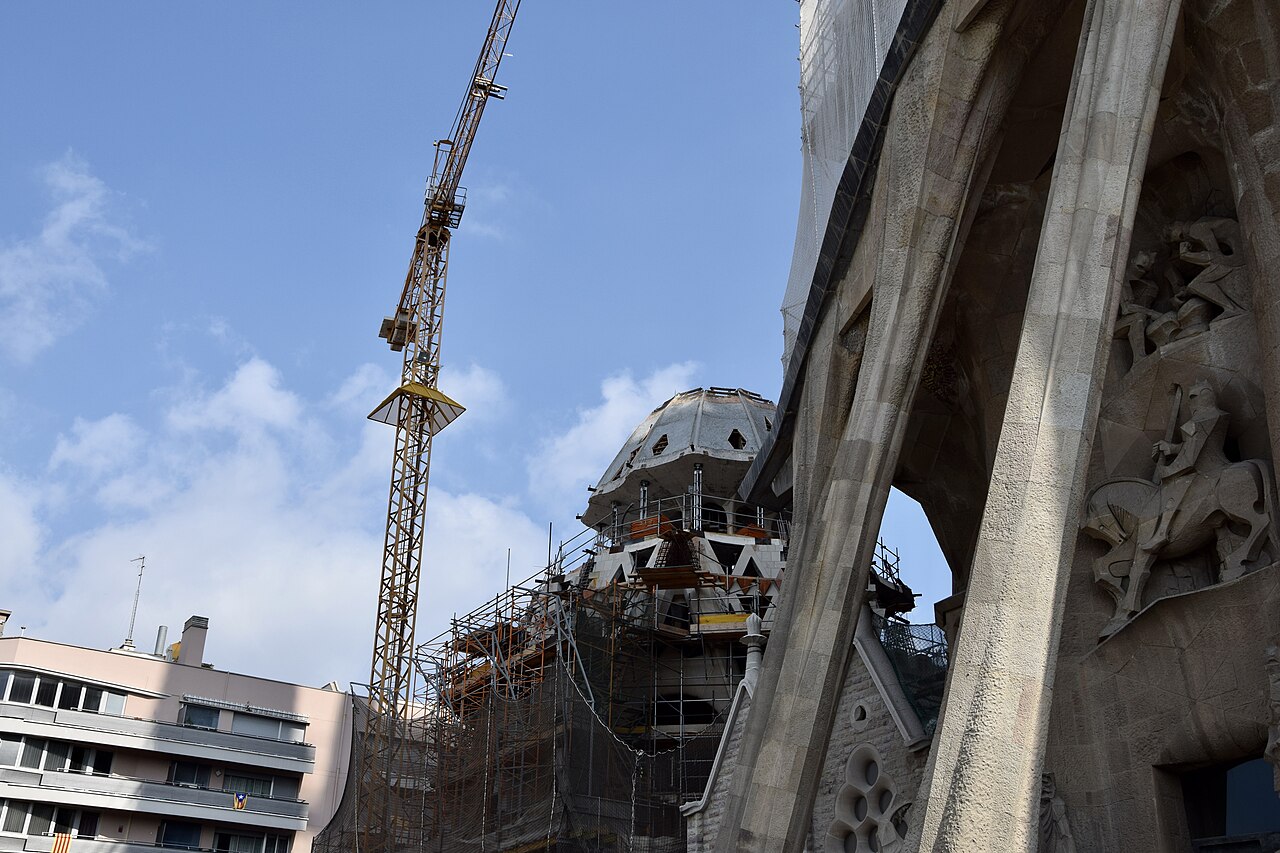
Below, the crypt offers another climatic register — burial intimacy and lower quiet that reframes the apse’s brightness. Outside, skyline viewpoints show the building’s exterior crown without disclosing this interior hierarchy. Both readings belong in the folio. Gaudí’s design language ties liturgical invention to nature metaphors throughout Barcelona; here the metaphor becomes directional: trees of stone leading to a clearing of worship.
We write without ticketing vocabulary. The apse is not a product; it is a geography. Trace it with patience, leave with orientation, and let the rest of Catalonia’s light teach you how east feels when stone remembers it.
Thresholds, crossings, and approach rituals.
Before the apse fully claims attention, crossings and thresholds stage partial arrivals. A crossing can feel like a plaza inside the church — a space of decision where side axes and main axes negotiate. Standing there, you can still pivot toward peripheral chapels or commit toward the liturgical heart. That choice structure is architectural narrative. Many visitors rush it; editorial looking names it.
Approach rituals need not be religious to be respectful. Slowing the final twenty metres, letting conversation fall, aligning your feet with the processional implication of the plan — these gestures acknowledge that geography of reverence works on secular bodies too. The building remains a church even when read as architecture. Holding both truths is adult literacy.
After studying the apse, reverse the walk and notice how the nave expands behind you. Departure teaches as much as arrival: hierarchy softens, forest returns, skyline-memory of towers may re-enter the imagination from outside. The folio asks you to write both directions. Catalonia’s light will still be waiting when you step back into the street grid of Barcelona.
Seasonal light revises the apse as thoroughly as it revises the skyline. A winter morning may leave the focus in a cooler register while the nave still gathers brighter colour elsewhere; a summer afternoon can reverse that balance. Keep dated notes. Orientation stays theologically steady while optics keep shifting — a useful tension for anyone writing about sacred geography without freezing it into one postcard hour. Barcelona’s latitude and coastal weather make those shifts frequent enough that a week of visits can feel like a small anthology.
Local liturgy and quiet visiting hours, when they occur, further alter the room’s social temperature. Even if you are not attending a service, noticing how ritual occupation changes footfall and hush completes the map. Architecture is not only plan; it is also the people who activate plan. The folio records activation without turning worship into spectacle for strangers’ cameras.
Carry the apse lesson outward: when you later stand on a rooftop and watch towers pierce the sky, remember that interior orientation has a counterpart in exterior crown. Inside and outside are one sentence spoken at two volumes. Catalonia’s capital rewards readers who keep both volumes open.