From a distance, Sagrada Família is less a building you enter than a punctuation mark the city keeps rewriting around. Barcelona’s grid, hills, and harbour produce a dozen honest viewpoints where the basilica reads as silhouette, as scaffolded ambition, as a vertical prayer against Mediterranean light. This folio essay treats those viewpoints as an architectural text of their own — a skyline reading for Catalonia’s capital, written without commerce and without the vocabulary of queues. Folio · not ticket sale: a stack of notes on how stone holds the horizon.
Why skyline reading matters
Most travelers meet Sagrada Família first as a photograph taken too close: a façade filling the frame, sculpture crowding the eye. Distance restores proportion. From Montjuïc terraces, from Tibidabo’s ridge line, from certain rooftops in Eixample, the basilica sits in relation to chimneys, cranes, and sea air. You see how Gaudí’s verticality answers a city that otherwise prefers horizontal streetblocks and calm cornices. The towers do not merely rise; they compete gently with the Collserola ridge and with the intermittent skyscrapers of the waterfront, creating a three-part skyline conversation unique to Barcelona.
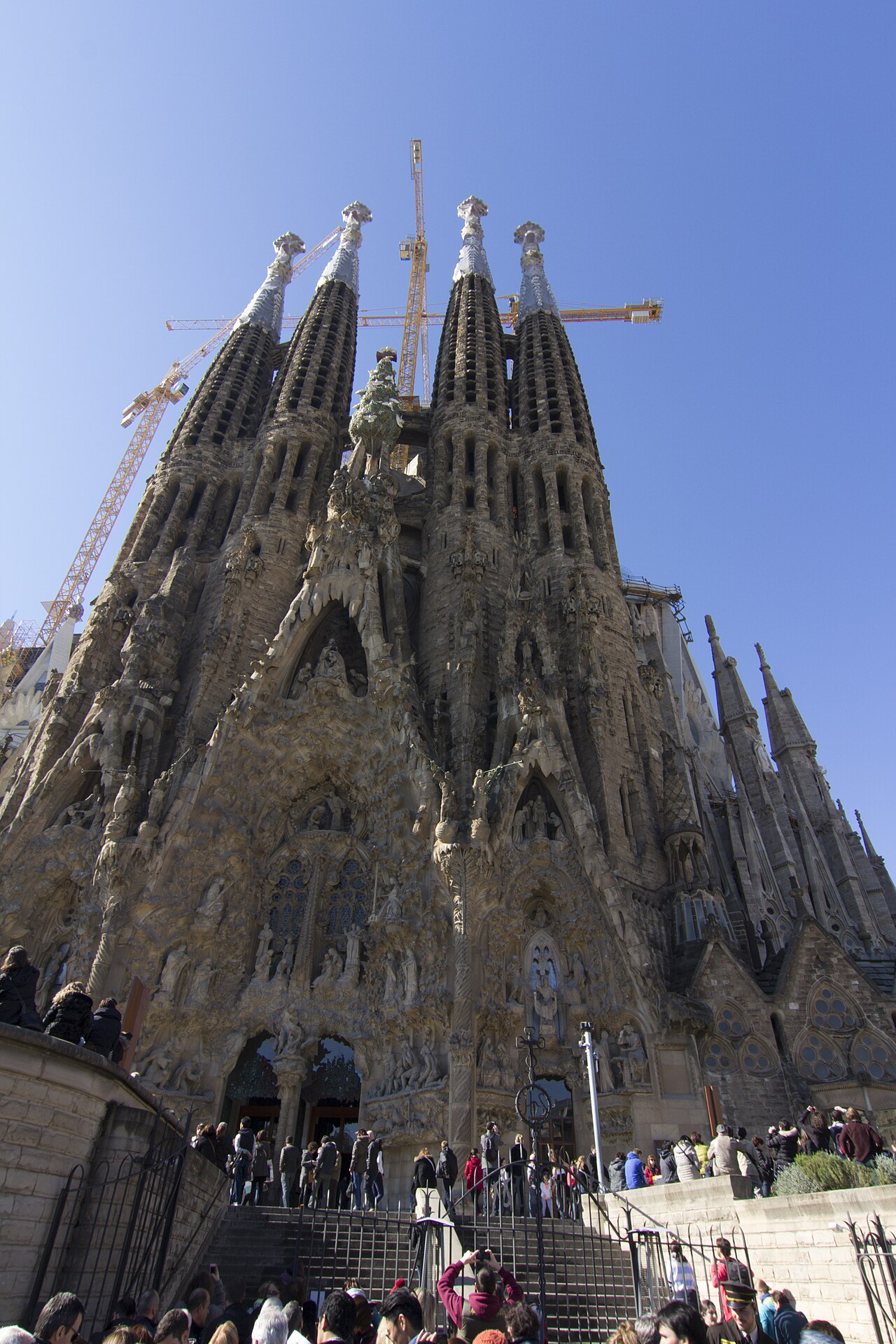
Skyline reading is also historical honesty. Scaffolding appears and disappears across decades. A viewpoint visited in winter may show different tower completeness than the same terrace in summer. The city itself has grown taller around the site. Distant observation documents change without pretending the basilica is a fixed postcard.
Ridgetops, terraces, and honest angles
Not every elevated spot is equally generous. Some hills bury the towers behind apartment plates; others frame them between two streets like a stage cue. The best viewpoints share a quality of breathing room — a foreground that does not scream, a mid-ground of roofs in warm ceramic, and then the sudden vertical cluster that gathers the eye. Late afternoon softens stone; midday hardens edges and emphasises colourless contrast between white piercings and blue sky.
Walkers who climb for the harbour sometimes discover the basilica as a side character — a lateral surprise rather than the main subject. That accidental framing is valuable. It reminds you that Sagrada Família belongs to a living metropolis, not a sealed monumental park. Trams, trees, laundry lines, and construction lifts share the same visual field. Editorial looking keeps all of them.
How light edits the silhouette
Catalan light is not polite. Summer glare bleaches detail until towers become knife cuts against cobalt. Winter light lower on the horizon paints warm sides and cold shadows, giving volume even at kilometres of distance. Mist from the sea, rare but memorable, turns the basilica into a fading idea — half present, half rumour. Photographers chase clarity; writers of this folio also chase the days when clarity fails, because unfinished architecture looks most honest when weather interrupts the brand of perfection.
- Morning east light — cool fronts, pale stone, a sense of waking verticals.
- Midday overhead — sharp sky piercings, reduced façade storytelling from afar.
- Golden late day — ochre roofs, warm shafts, skyline intimacy.
- Blue hour — towers as ink glyphs; cranes and lamps share the register.
Carry a notebook, not a checklist. Sketch which towers are visible from which ridge and what the foreground does to scale. The point of skyline reading is calibration — learning how large the basilica feels against Barcelona before you ever stand at its feet.
City texture around the distant towers
Barcelona’s Eixample grid turns distant viewing into an optics lesson. Long avenues act as sight corridors; when one aligns even roughly with the site, the towers punch through perspective like a vanishing-point accident. On other days the grid refuses to cooperate and you must climb. Both experiences teach grammar: the building is local enough to interrupt neighbourhood streets and metropolitan enough to appear from parks across the city.
Listen as you look. Distant Sagrada Família is often quieter than close range — wind, traffic murmur, birds. The skyline essay is partly sonic: how the city’s ambient noise softens when you are above it, and how the basilica then feels like a still object in motion around it.
What distance prepares you to see later
Skyline familiarity changes the later close visit. Having watched branching silhouettes from afar, you recognise trees of stone when you stand under them. Having watched construction continuity as a skyline fact — new verticals rising year by year — you enter the site understanding that incompleteness is structural honesty, not delay. Distance is pedagogy. It trains patience.
This guide stays outside the commerce of access. We do not narrate lines, packages, or countdowns. We describe how Barcelona’s geography teaches the eye. When you next stand on a terrace with the Mediterranean somewhere at your shoulder, look for the piercings of sky between towers. That intermittent blue is part of the design — Gaudí’s habit of letting heaven into stone. The folio continues elsewhere into vaults, columns, crypt quiet, and ornament; start here when you need the whole city as your first classroom.
Seasonal silhouettes and return visits.
Barcelona seasons rewrite the same viewpoint without relocating it. Spring clarity can cut towers as crisp as paper against blue; late summer haze softens edges until the basilica looks almost aquatic. Autumn evenings sometimes deliver a copper sky that turns unfinished and finished stone into a single warm rank. Winter, when tramontane influence or simply cooler air rinses the atmosphere, can make distant looking unexpectedly sharp — the kind of day when you invent new compositions from an old terrace. Return visits therefore are not repetition; they are controlled experiments with light as the variable.
Neighbourhood foregrounds change too. Construction elsewhere in the city, new rooftop plantings, a crane that appears for months and then vanishes — all become members of the skyline cast. Keeping a simple dated list of what stands between you and the towers turns casual tourism into a personal archive. That archive is the opposite of a sales funnel. It is knowledge.
When friends ask for a “best spot,” resist ranking. Instead describe conditions: how much reef of roofs you want, whether you prefer the Mediterranean somewhere in the frame, whether scaffolding currently interests you as part of the essay. Bestness is seasonal and temperament-dependent. Editorial looking thrives on that ambiguity. The skyline of Catalonia’s capital will keep offering alternatives as long as hills, grids, and sea air remain generous.