Sagrada Família is a summit, not an island. Antoni Gaudí’s design language travels through Barcelona in smaller doses — park benches that twist like roots, façades that refuse flatness, iron leaves that catch street light. This essay traces that dialect as it moves from intimate commissions to the basilica’s vast grammar, helping readers hear rhymes across Catalonia’s capital. A folio of motifs, never a sales map.
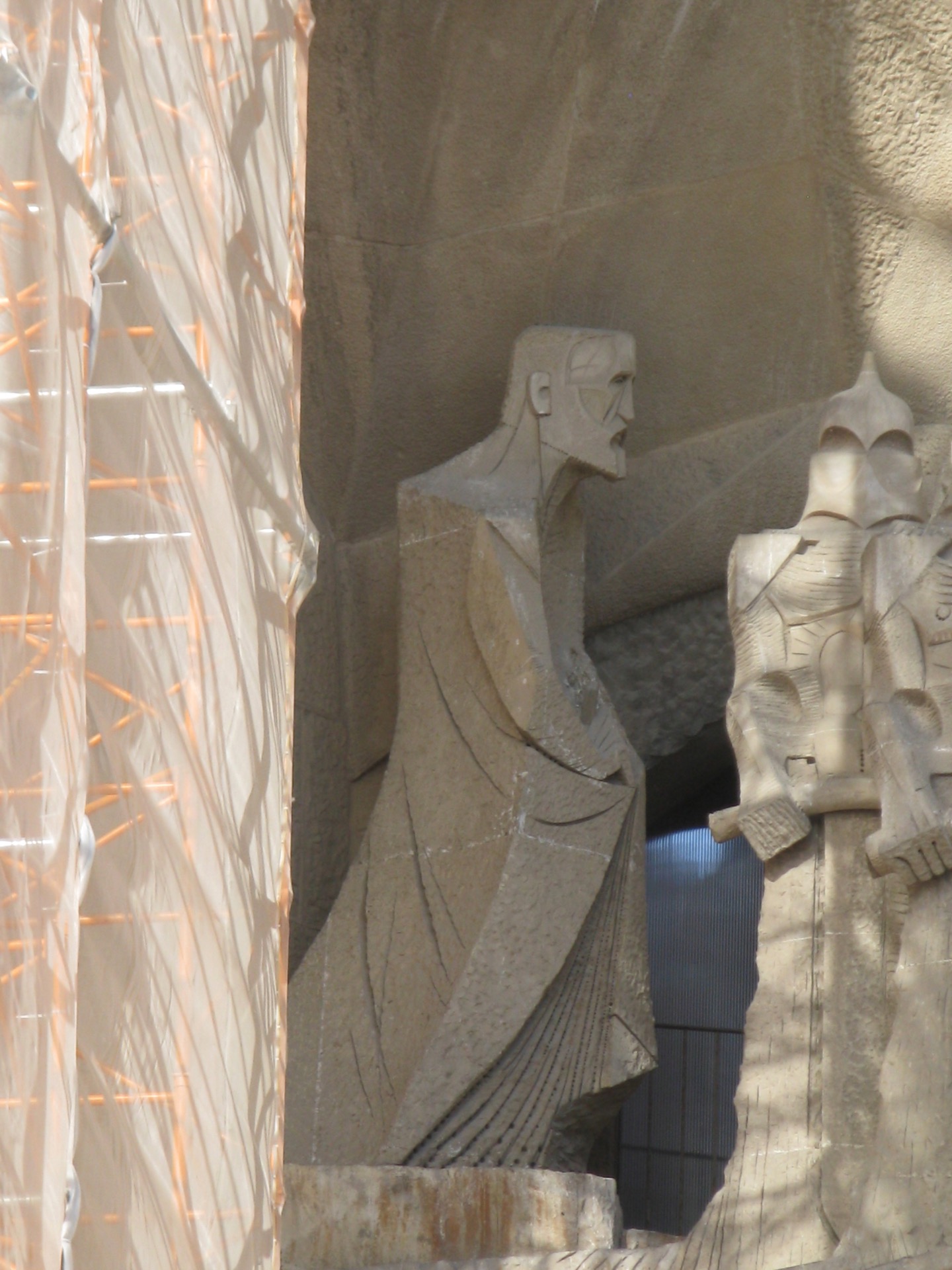
Shared grammar, different scales
At townhouse scale, Gaudí compresses invention into stairwells, ceilings, and street doors. At park scale, he lengthens the sentence into promenades and viaducts. At basilica scale, vocabulary becomes epic: forests of columns, liturgical orientations, decades of continuous craft. Recognising the shared grammar prevents treating Sagrada Família as an inexplicable anomaly. It is the loudest speaking of a language already present in quieter rooms.
Curves replace abrupt corners; structure often wants to look alive; colour and texture refuse polite neutrality. These habits appear whether the program is domestic or sacred. Scale changes intensity, not identity.
Nature as workshop across commissions
Bones, shells, trees, waves — Gaudí’s references return. A park’s undulating bench trains the body for later vault curves; a façade’s vegetal ironwork prepares the eye for nave ornament. Nature is not pasted on. It is analysed for structural cleverness and then translated into stone, ceramic, metal.
Walking Barcelona with this thesis turns transit into comparative literature. One afternoon of park curves plus one morning under hyperboloid trunks equals a bilingual lesson. The folio encourages that sequencing without chronometer tyranny.
Colour, ceramic, and urban weather
Trencadís and related mosaic habits glitter under Catalan sun, then mute under cloud. Colour is kinetic with weather. That lesson transfers indoors when nave glass paints midday vaults. Outside mosaics teach outdoor optics; interior stained light teaches indoor optics; together they form Gaudí’s chromatic education.
- Organic line — refusal of purely rectangular calm.
- Structural metaphor — nature as engineering tutor.
- Surface sparkle — mosaic and texture answering Mediterranean light.
- Scalar leap — same dialect from door handle to tower.
Pick one motif — a leaf, a spiral, a colour shard — and hunt it across two different Gaudí contexts in one day. Comparative looking builds fluency faster than isolated monument hops.
City as syllabus
Barcelona’s hills and grids stage Gaudí’s works at different distances. Sometimes a façade surprises you mid-block; sometimes a park commands a long visit; sometimes the basilica punctuates the entire skyline. The city’s topography becomes a syllabus outline. Learning the language means accepting that homework is scattered.
Avoid reducing the dialect to quirky tourism icons. Behind playful surfaces sits serious structural invention and religious intensity. The basilica makes the seriousness unmistakable; parks make the playfulness generous. Holding both is mature reading.
Back to stone forest and living work
Once the city dialect is fluent, column branching and nature ornament inside Sagrada Família stop surprising for novelty and start satisfying for consistency. Construction continuity also fits the language: Gaudí often pushed techniques; successors continue pushing within fidelity. Crypt quiet reminds that the dialect includes devotion, not only delight.
This essay sells nothing. It invites a walker’s literacy — hearing rhymes between park and basilica, balcony and vault. In English we still say the Catalan city’s name with affection: Barcelona. Let its Gaudí sentences keep teaching. Folio pages keep opening.
Walking routes that teach comparative grammar.
Without turning this into an itinerary product, consider pedagogical sequencing in your own words. A morning among park curves softens the body for later vaults; an afternoon façade with iron flora primes column ornament; a distant skyline look before or after either prevents over-focusing on near spectacle. Sequence is a teacher you design yourself. Commercial packages prefer compressed checklists; folios prefer spaced comprehension.
Language learning also needs rest days. Gaudí saturation can make every curve feel identical. Step into an ordinary Eixample block of restrained classical fronts and notice what Gaudí is arguing against. Contrast is dictionary work.
Finally, allow non-Gaudí Barcelona to speak — Gothic quarters, contemporary waterfront, mountain parks without modernisme. A design language is clearer when not the only sound in the city. Then return to Sagrada Família with ears that recognise dialect rather than noise. That is fluency: not worship of an architect as brand, but capacity to hear how his sentences land in Catalonia’s complex urban paragraph.
Ironwork rewards special attention: leaves that cast moving shadows on pavements, railings that refuse straight industrial boredom, door furniture that feels closer to sculpture than hardware. These pieces are pocket lessons in the same intelligence that guides basilica ornament. Photograph them if you must, but also trace their outlines in a notebook. Tracing forces comprehension of curve that thumb-scrolling rarely achieves.
Colour strategy across commissions also varies by program. Domestic interiors may enclose chromatic surprises; parks splash them under open sky; the basilica organises colour into theological theatre. Comparing strategy teaches intention. Intention is what separates design language from random quirk. Gaudí was rigorous even when results look playful.
As English-language visitors we sometimes receive Gaudí through simplified brand stories. Push back gently by reading buildings as arguments. Arguments have premises: nature teaches structure; structure can be beautiful; beauty can serve devotion and civic joy. Premises travel from Park Güell pathways to Sagrada Família vaults without needing a ticket metaphor. They only need eyes and time — still abundant if you claim them.