Descend and the basilica changes climate. The crypt of Antoni Gaudí sits in a quieter register — lower ceilings in feeling if not always in fact, softer light, a grammar of burial rather than of soaring vault theatre. This essay stays with that hush: how the lower level reframes Gaudí’s project as devotion over decades, and how Barcelona’s most famous vertical dream keeps a buried room for remembrance. Written as folio, never as sale.
Why the lower level matters
Great buildings need quieter organs. Without them, spectacle becomes continuous and thin. The crypt provides counterpoint: death acknowledged, founders remembered, the long century of construction given a human face. Gaudí’s burial here anchors myth to place. The upper stone forest celebrates life upward; the crypt admits gravity.
Visitors often arrive after nave dazzle, pupils still adjusting. That physiological transition is architectural pedagogy. The body learns contrast. Bright to dim is a sentence the building writes in two clauses.
Light as lowered voice
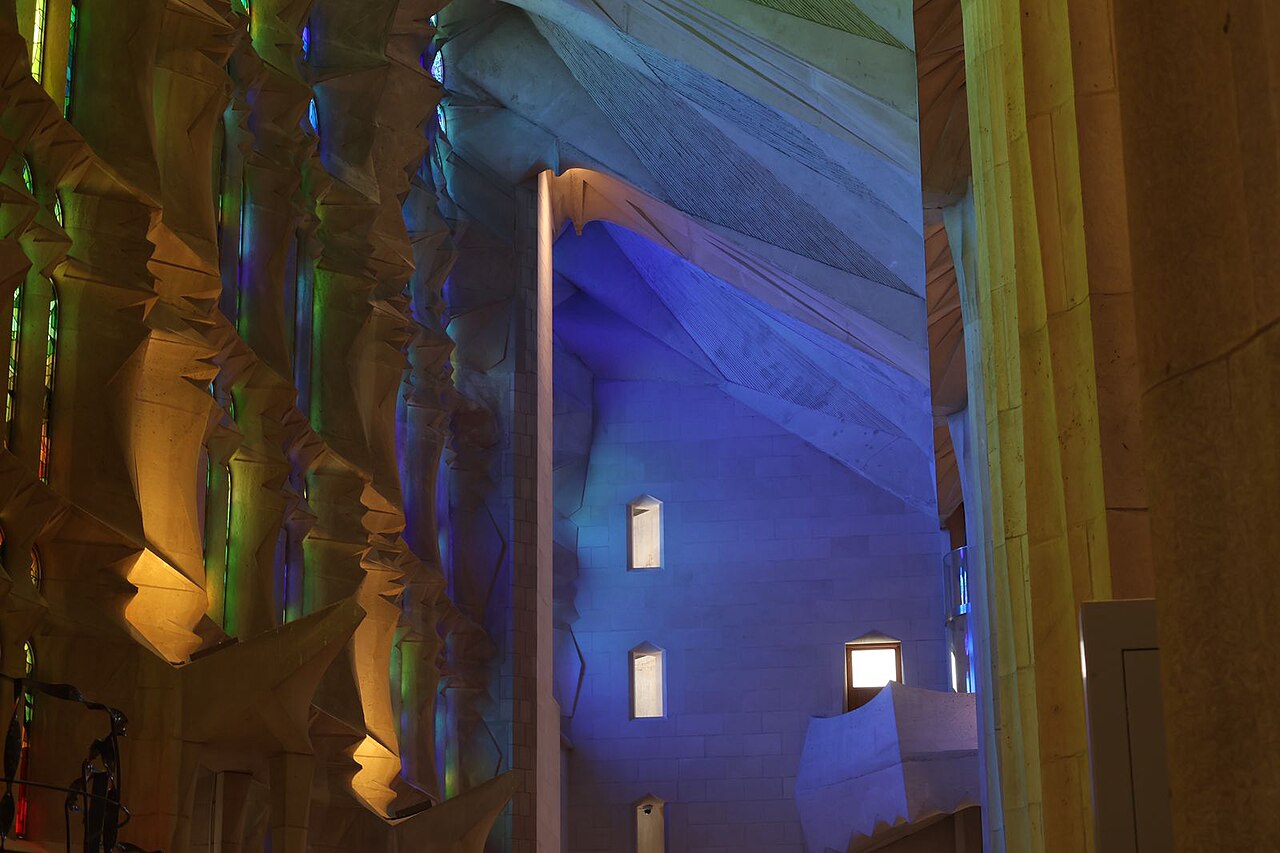
Crypt light rarely performs rainbow theatre. It prefers filtration, reflection, pale washes. Surfaces catch remnant day rather than consuming it. Lamps, where present, take on a domestic sacredness — chapel scale within basilica scale. The folio notes this without inventory of fixtures; atmosphere is the subject.
Because light is quieter, sculpture and inscription invite closer looking. Distance shrinks. Reading replaces panorama. This is editorial reciprocity to the skyline essay: far versus near, exterior versus subterranean.
Hush, pace, and respect
Crypt manners differ from nave habits. Steps shorten. Cameras may feel intrusive even when allowed. The space teaches restraint by proportion. A folio reader watches their own behaviour as part of the architecture’s effect — how design regulates ethics of attention.
- Descent — threshold that recalibrates eyes and voice.
- Burial focus — remembrance denser than spectacle.
- Soft light — intimacy over chromatic drama.
- Return upward — crypt memory changing how vaults feel afterward.
After leaving the crypt, pause once before re-entering the nave’s full brightness. Notice how loud light suddenly seems. That afterimage is part of Gaudí’s completed lesson of contrasts.
Continuity of devotion and stone
The crypt is also a chapter in construction continuity. Work above continues for decades; remembrance below insists that persons, not only geometries, drive the project. Scaffolding and cranes outside belong to living architecture; the crypt belongs to living memory. Together they refuse the fantasy of an instantly finished monument.
Stone in quieter spaces often reveals finishes differently — joints more readable, textures less bleached by glare. Close looking rewards patience. Do not rush a room designed against rush.
From crypt to the city’s Gaudí language
Gaudí’s wider Barcelona work — parks, houses, wrought iron flora — rarely mirrors crypt hush directly, yet the same devotion to craft appears. The crypt concentrates that devotion into mourning and thankfulness. Reading both city and crypt prevents reducing Gaudí to colourful façades alone.
This guide contains no commerce. It will not tell you how to purchase access or how to schedule a stop. It tells you how quiet works when a city of noise keeps a lower room for an architect who treated stone as prayer. Carry that quiet back into Catalan streets; let traffic sound different afterward.
Memory, myth, and measured quiet.
Gaudí’s public myth can overwhelm quieter facts. Crowds sometimes arrive expecting cinematic emotion and leave restless when the crypt offers something simpler: stone, low light, remembrance. The folio values that simplicity. Myth is allowed; inflation is not. Sitting with the disproportion between international fame and this contained space is itself an insight. Great lives often compress, at the end, into rooms smaller than their reputations.
Measured quiet also means refusing performative sadness. You need not manufacture tears to honour a grave. Attention is honour. Breathing slower than the nave’s pace is honour. Leaving without a trophy photograph can be honour.
When you climb again, carry a private sentence — not a slogan — about what lower light taught. Maybe it is about time: decades of construction above, a settled resting place below. Maybe it is about scale: basilicas need intimate organs. Whatever the sentence, keep it short enough to remember on a tram ride through Barcelona’s afternoon. Short sentences travel well. They are portable folio pages.
Historical layers under major churches often include earlier liturgical rooms, foundations, and adjusted plans. Even without claiming expert archaeology in every glance, a visitor can sense that subterranean space compresses time. The crypt gathers centuries the way upper vaults gather light. That compression explains part of the hush: rooms that hold burial and memory do not owe you entertainment.
For readers arriving from louder Gaudí sites — parks bright with mosaic, façades erupting with ceramic — the crypt recalibrates. It proves the dialect includes minor key. Without minor key, the major key of midday vaults would thin into tourist sugar. Balance matters. Barcelona is large enough to hold both registers in one afternoon if you refuse to rush.
Write three concrete observations before you leave the lower level: one about light, one about sound, one about your own pace. Concrete notes defeat vague awe. Vague awe is where commerce loves to insert urgency. Concrete notes belong to readers. Keep them. They are already a folio.