Most monuments ask to be finished in the mind. Sagrada Família asks to be watched while still becoming. Cranes, stone yards, temporary decking, and newly set blocks are not interruptions to architecture here — they are architecture’s present tense. This essay treats ongoing construction as a living text in Barcelona: continuity across generations, craft under weather, and the honesty of scaffolding against sky. Folio · not ticket sale.
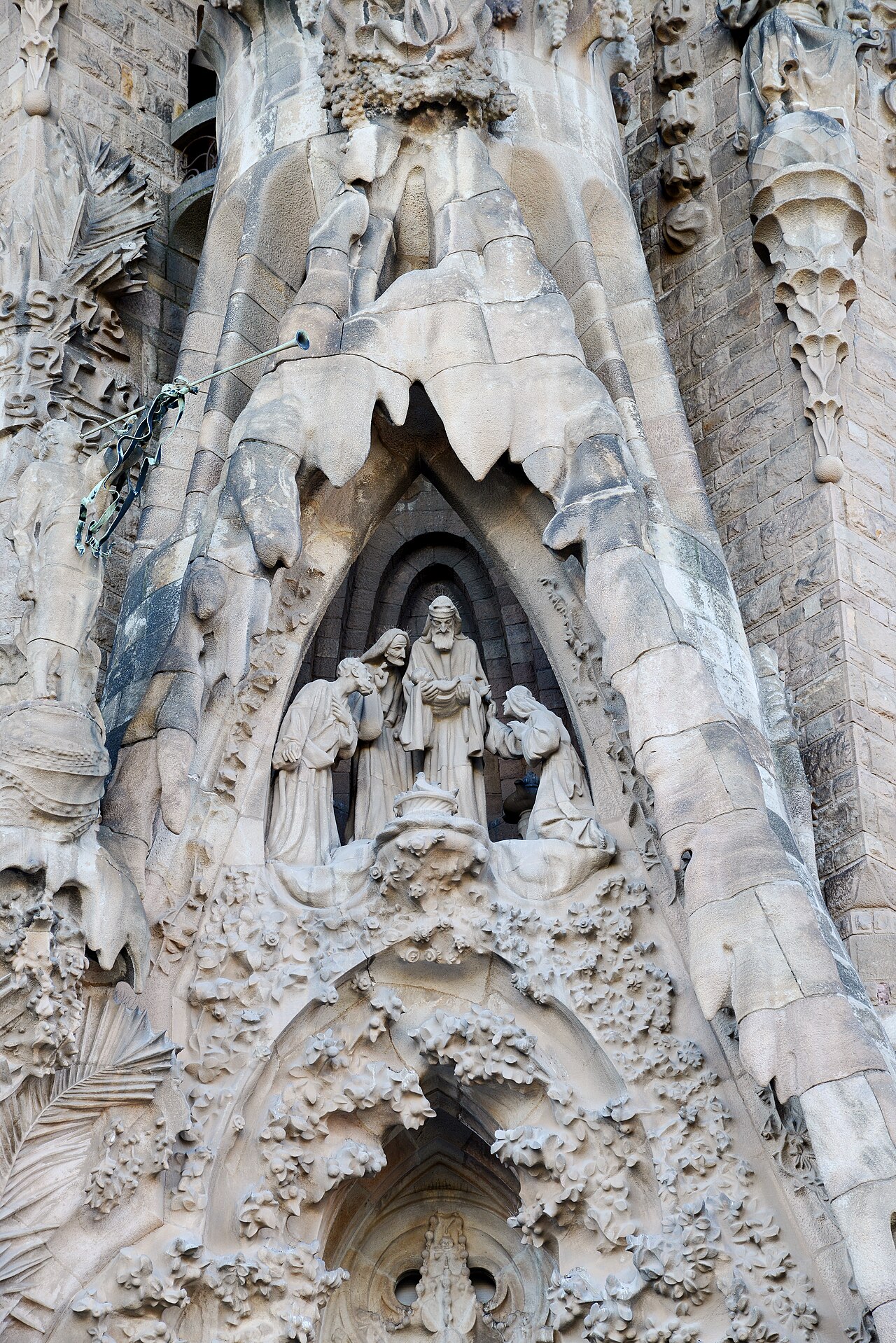
Unfinished as aesthetic fact
There is a tourism habit of apologising for scaffolding. This folio refuses the apology. Gaudí left a project sized beyond a single lifetime; successors interpret, invent within constraints, and raise stone into weather that never stops. Visitors who want a sealed museum object will always be slightly frustrated. Visitors who want a process will find rare honesty: a cathedral that admits history is still writing.
Skyline readings make this vivid. From distance, new verticals change year by year. Construction continuity is measurable by return visits. The building teaches patience at metropolitan scale.
Craft visible in the open
Stone dust, cutting jigs, protective wraps, and lift silhouettes narrate labour. Even when access to yards is closed, glimpses from streets reveal that modernisme’s heir is still made by hands and machines in concert. Digital design tools may guide complex geometries, yet the final argument remains material: weight, joint, finish.
Weather partners the work. Rain stops lifts; wind rewrites schedules; Mediterranean sun hardens routines. Construction sites anywhere are climate theatres; here the theatre faces one of Europe’s most photographed skylines, so the drama is public.
Generations as authors
Living architecture means plural authorship without erasing origin. Gaudí’s drawings and models remain a magnetic north; later architects and craftspeople navigate toward that north with contemporary tools. The folio does not turn this into a stadium of opinions. It simply notes that continuity is argumentative and generative — every decade must decide how to be faithful.
- Scaffold as silhouette — temporary lines entering the city’s skyline essay.
- Material process — cutting, lifting, setting as present-tense ornament.
- Generational craft — fidelity debated and performed in stone.
- Public patience — watching decades rather than demanding instant closure.
On a return to Barcelona, compare one tower cluster to your older photographs. Continuity becomes personal when memory holds the previous skyline version. Note what rose, what wrapped, what revealed.
Ethics of looking at labour
Construction sites are workplaces. Editorial looking keeps distance, avoids risky trespass, and treats workers as people rather than as props for images. A folio is not a thrill account of climbing barriers. Respect is part of literacy. The basilica’s living status does not license intrusive curiosity.
Sound belongs too — drills, hammers, radio murmur — a score that upper vault quiet will later contradict. Holding both acoustic worlds is part of understanding the whole organism.
Construction besides crypt, columns, and city
Crypt memory of Gaudí intensifies construction’s meaning: the buried architect’s vision still rising. Columns and vaults already finished demonstrate the standard to which new work aspires. Across Barcelona, other Gaudí works stand complete; the basilica’s incompleteness makes it uniquely pedagogical. Design language becomes not only motifs but method — stay with a problem across time.
No packages here, no priced “behind the scenes” pitch. Only an invitation to stop treating scaffold as shame. In Catalonia’s capital, living stone may be the most truthful cathedral image of the century. Watch it become. Take notes. Leave tickets to other desks.
Photography ethics around active work.
Living sites tempt dramatic images: silhouettes of workers, sparks, dangling loads. Ethics ask restraint. Faces of labourers are not free props; safety zones exist for reasons heavier than composition. From lawful public vantage points you can still document scaffold geometry, crane arcs, and the dialogue between wrapped stone and finished stone. Those subjects are rich enough without intrusion.
Time-lapse imagination helps. Mentally project six months forward: where will the wrap fall? which silhouette will thicken? Continuity becomes participatory when your mind finishes a frame the site has not yet built. That mental participation is free and non-commercial — a perfect folio habit.
Talking with locals sometimes yields stories of watching towers grow across childhoods. Listen. Oral continuity partners material continuity. Then write your own note with date and weather. Decades later those scraps become the private historiography of an unfinished cathedral. Barcelona’s skyline will have changed again; your notes will prove you were paying attention while it did.
Materials themselves narrate eras. Newer stone may sit beside older fabric with subtle colour differences that only patient eyes catch after rain darkens porosity. Joint quality, tooling marks, and protective films become readable chapters. You do not need specialist credentials to notice; you need willingness to look twice. That willingness is the core skill this site exists to practise.
Institutional stewardship also belongs in the living-architecture essay. Workshops, archives, and educational displays — when publicly offered as interpretation rather than as purchase theatres — extend construction into cultural memory. We mention them as context, not as leads to chase with a wallet. Folio · not ticket sale remains the spine.
At night, illuminated cranes and incomplete towers stage a different honesty: the city admits work continues after tourists thin out. Daytime applause is not the engine. Craft schedules, safety rules, and funding realities are. Respecting that realism keeps editorial language adult. Sagrada Família is not a theme of permanent unveiling; it is a site of ongoing making in ES-CT’s densest storied neighbourhood of stone ambition.